2. Uneven Cutter Lengths
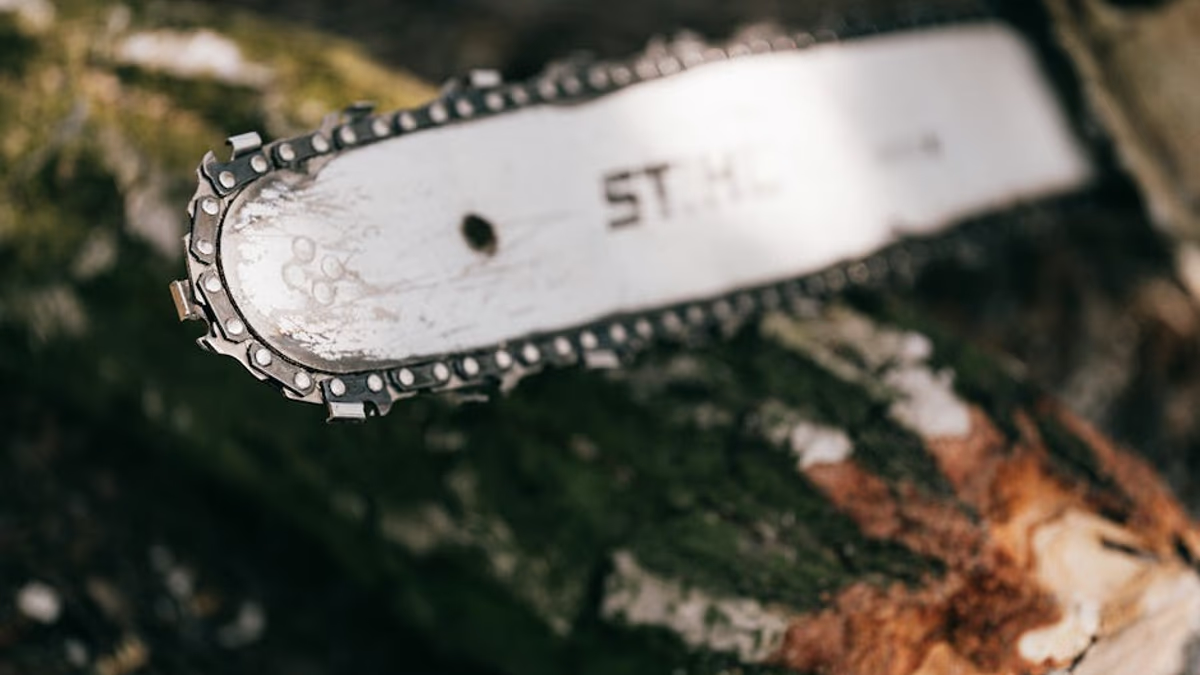
If your chain has been hand-sharpened over time, it's common for cutters on one side to be shorter than the other. This causes the saw to pull to one side during cutting. A small difference can be corrected, but if the cutters vary by more than 1mm, the chain needs replacing.
3. Damaged or Missing Teeth
Inspect the chain carefully. Look for:
- Chipped or broken cutter teeth
- Missing drive links
- Cracked tie straps connecting the links
- Bent or deformed links
Any of these is an immediate replacement — a damaged chain can snap under load.
4. The Chain Stretches Quickly
Chains stretch with use as the rivets and links wear. Some stretch is normal and you'll adjust the tension regularly. But if you're tightening the chain every few cuts, the rivets are worn beyond safe limits. A loose chain can jump off the bar at speed.
5. You're Getting Sawdust Instead of Chips
A sharp chain produces chunky wood chips. If you're getting fine powder or sawdust despite recently sharpening, the chain geometry is worn beyond effective cutting. The depth gauges may also be too high relative to the shortened cutters.
6. You Have to Force the Saw
A properly maintained chainsaw should pull itself into the wood under its own weight. If you're pushing down hard to make it cut, something is wrong. After ruling out a dull chain (sharpen it first), a worn chain that won't hold an edge is the most likely cause.
How to Choose a Replacement Chain
You need three measurements:
- Pitch — the distance between three consecutive rivets, divided by two (common sizes: 3/8", .325", 1/4")
- Gauge — the thickness of the drive links (common: .050", .058", .063")
- Drive link count — the total number of drive links on the chain
These numbers must match your bar and sprocket. They're usually stamped on the bar or listed in your saw's manual.
Paul's tip: "If you're not sure, bring the old chain and the bar to the workshop. I'll match it in two minutes. Getting the wrong chain is the most common mistake I see people make when ordering online."
Book a chain replacement: Call 07342 239878 or WhatsApp Paul — fitting usually takes less than 15 minutes.