The most common cause of starting problems on petrol garden machinery that reaches Paul's workshop is the carburettor — or the stale fuel that wrecked it. The question customers ask most is simple: can you just clean it, or does it need a full rebuild? The answer depends on how long bad fuel sat in the machine, whether the diaphragms have hardened, and which type of carb is fitted.
Paul cleans and rebuilds carbs daily on mowers, strimmers, brushcutters, chainsaws, hedge trimmers and blowers at the Hyde workshop. This guide explains the difference between a clean and a rebuild, when each is appropriate, and what you can safely try at home.
Why Carbs Fail on Garden Machinery
Petrol degrades within weeks in small engines. The light fractions evaporate and leave varnish that blocks jets, sticks the float needle, and hardens rubber diaphragms. Two-stroke machines are worse because the oil separates and gums faster.
The usual chain of failure:
1. Old fuel left in the tank over winter or between jobs
2. Varnish restricts the main jet and idle circuit
3. Diaphragms stop pulsing fuel correctly
4. Engine won't start, surges, or dies under load
Prevention is simple: drain fuel for storage, use fresh petrol, and stabilise only if you understand the limits. Paul's winter storage guide covers mowers; the same rules apply to every petrol tool.
Want Paul to look at it?
Paul offers honest lawnmower repair across Greater Manchester. Most jobs same day or within 48 hours. Call or WhatsApp for a free quote.
Float bowl carbs (many 4-stroke mowers): Briggs & Stratton, Honda GCV/GXV, Mountfield. A bowl underneath holds fuel; a float and needle control level. Varnish gums the needle and jets.
Diaphragm carbs (most 2-stroke handhelds): Stihl, Husqvarna, Echo strimmers, chainsaws, blowers. No float bowl — pulse diaphragms pump fuel. Diaphragms harden with age and ethanol exposure.
Primer bulb circuits: Almost all small engines have a primer that fills the carb throat. Perished bulbs mimic carb failure.
Knowing which type you have tells you whether a bowl clean might work or whether you need a diaphragm kit.
When a Carb Clean Is Enough
A clean — strip, soak or spray passages, compressed air, reassemble — fixes most first-time varnish problems if caught early.
Good candidates for a clean:
- Machine sat one season with fuel in the tank
- Starts but surges or hunts
- Failed after one spring of rough running
- Diaphragms still flexible when you press them
- Float bowl has varnish but needle still seats
What a professional clean includes (Paul's standard):
- Strip carb from the machine
- Remove bowl or cover plate
- Clean all jets and idle passages with carb cleaner
- Compressed air through every hole
- New bowl gasket or cover gasket if damaged
- Reassemble and test idle and throttle response
Paul's tip: "Mountfield from Hyde with spring no-start — carb bowl full of jelly from last year's fuel. Clean, new gasket, fresh petrol. Customer collected same afternoon. That is a clean, not a rebuild."
Varnished carburettor from a petrol strimmer before and after a proper clean in the workshop
When You Need a Full Rebuild
A rebuild replaces all wearable internals — diaphragms, gaskets, inlet needle, sometimes the entire carb body if corroded.
Rebuild indicators:
- Machine sat two or more seasons with fuel inside
- Diaphragms are stiff, cracked or permanently creased
- Main jet cleaning does not restore fuel flow
- Engine starts on choke only and dies when warm
- Previous owner or another shop has over-adjusted mixture screws
- Ethanol damage — white powder corrosion inside the carb
What a rebuild includes:
- Full strip to individual components
- Genuine or OEM-equivalent gasket and diaphragm kit matched to the model
- New inlet needle and seat where applicable
- Jet inspection and replacement if worn
- Factory-spec tuning on adjustable carbs
- Test run under load before return
Paul's tip: "Stihl FS 91 from a landscaper in Denton — third season, never drained fuel between jobs. Diaphragms were rock hard. Rebuild kit, tune, new fuel lines. Machine ran better than it had in two years."
Clean vs Rebuild: Quick Decision Table
| Symptom | Likely fix |
|---------|------------|
| Won't start after one winter | Clean + fresh fuel + new plug |
| Surges or hunts mid-use | Clean main jet and idle circuit |
| Starts on choke, dies warm | Rebuild — diaphragm or mixture issue |
| Primer bulb flat or cracked | Replace bulb and lines first |
| Multiple seasons with fuel inside | Rebuild almost certain |
| Adjusting H/L screws has no effect | Rebuild or replace carb body |
DIY Carb Clean: What You Can Safely Try
If you are methodical, a home clean on a float bowl mower carb is reasonable:
1. Photograph every linkage position before removal
2. Drain fuel first
3. Remove the bowl nut and bowl — watch for small parts
4. Spray jets and passages with carb cleaner
5. Do not poke jets with metal wire — use nylon bristles or replace the jet
6. Refit with a new bowl gasket
Paul does not recommend home diaphragm carb rebuilds on 2-strokes unless you have the correct kit and experience. One wrong gasket orientation and the machine floods or leans out dangerously.
Cost and Time Expectations
Paul's workshop pricing reflects labour and parts, not guesswork:
Basic carb clean (mower or 2-stroke): Often same-day, lower cost, no kit needed if gaskets are sound
Full rebuild with kit: Half day for complex carbs, kit cost varies by brand — Stihl and Husqvarna genuine kits cost more than generic mower carbs
Replacement carb assembly: Occasionally cheaper than hunting obsolete parts on twenty-year-old machines
Paul always quotes after a quick inspection. If the machine is not worth the repair, Paul will say so — see the repair vs replace guide.
Which Machines Share the Same Carb Problems
Petrol lawnmowers (Honda, Briggs, Mountfield, Hayter): Bowl varnish and stale fuel. Most common professional repair in March and April.
Strimmers and brushcutters (Stihl, Husqvarna, Honda): Diaphragm hardening and jet blockage. See the strimmer won't start and cutting out guides.
Chainsaws: Same diaphragm carbs as strimmers plus safety-critical idle — Paul tunes these to spec, not by ear alone.
Hedge trimmers and blowers: Identical fuel system failures. Often neglected longer between uses, so rebuilds are more common.
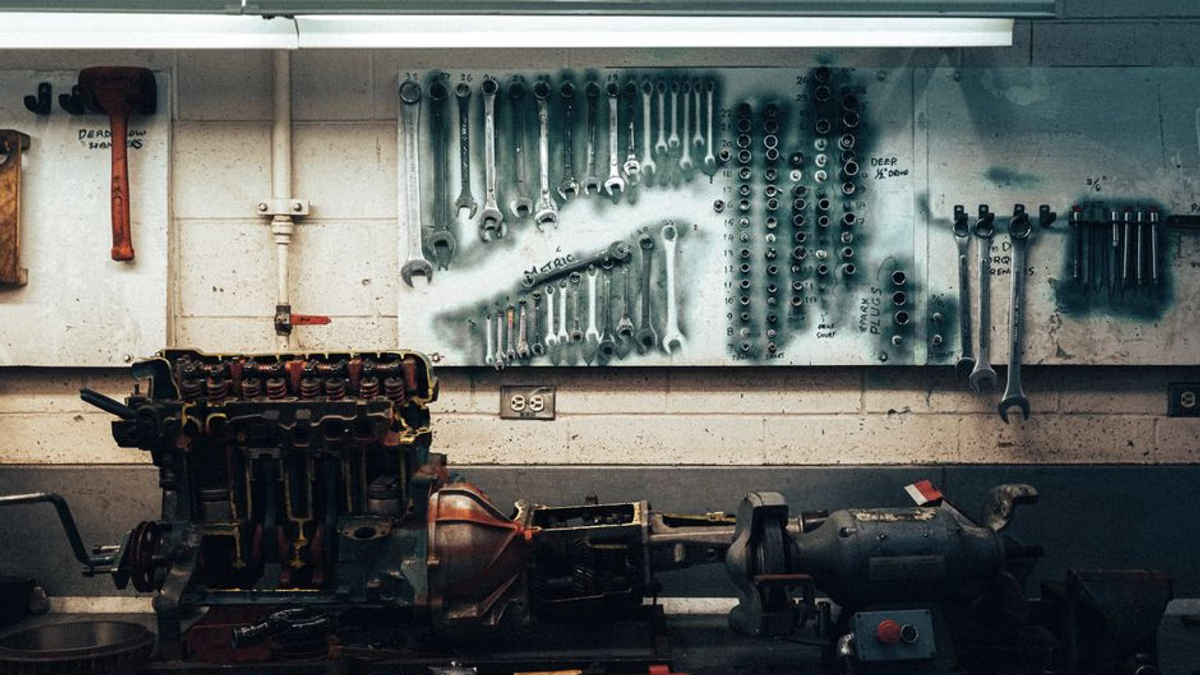
Small petrol engine repair tools on a workshop bench
Prevention: Cheaper Than Any Carb Job
Drain fuel for winter storage or run the engine dry
Use fresh fuel each season — do not top up old with new
Mix 50:1 two-stroke accurately with quality oil
Service annually before heavy use
Replace fuel lines and primer bulbs every few years on handhelds
Paul's five things that ruin petrol engines post covers the broader picture.
When to Call Paul
If a clean and fresh fuel do not fix the starting or running problem within one careful attempt, bring the machine in. Paul has the kits, the compressed air, and the experience to rebuild carbs correctly the first time — and he tests every machine under load before it leaves the workshop.
If the steps above haven't solved it, Paul offers honest lawnmower repair across Greater Manchester. Most jobs same day or within 48 hours — call or WhatsApp for a free quote.