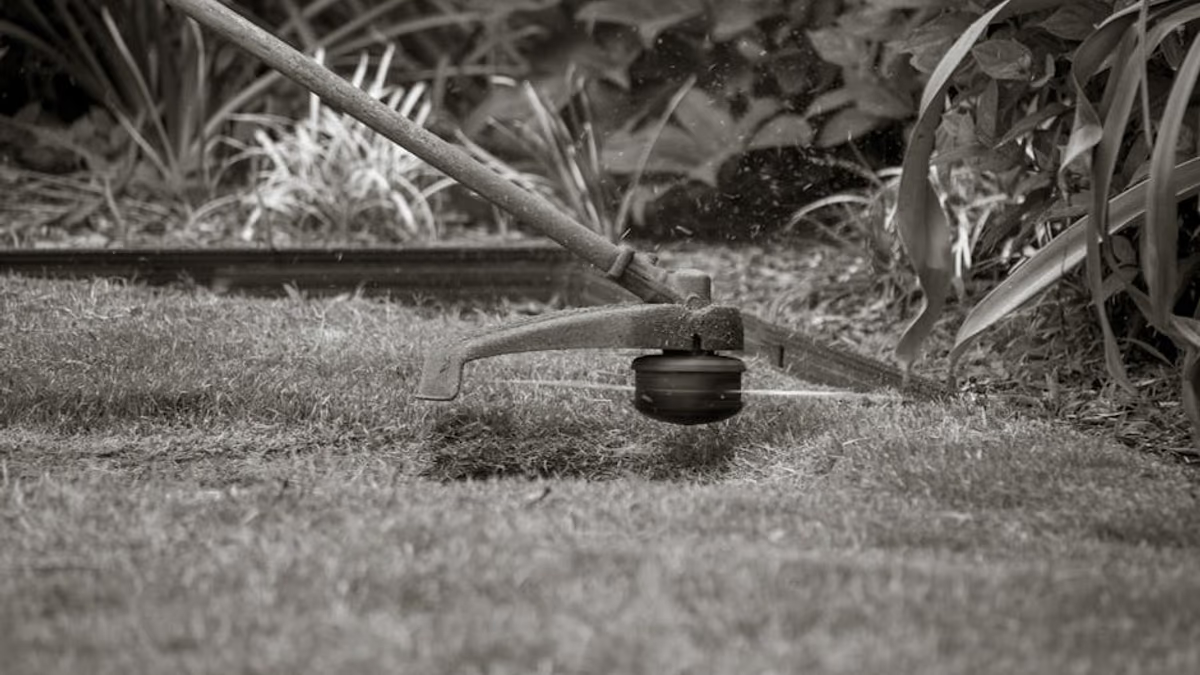
Two-stroke engines power most strimmers, chainsaws, hedge trimmers, and leaf blowers. Unlike four-stroke mower engines, they don't have a separate oil reservoir — the oil is mixed with the petrol and burns with it during combustion.
Use the wrong oil or the wrong ratio and you'll damage the engine. Paul sees this regularly and it's almost always avoidable.
Why Two-Stroke Oil Matters
In a two-stroke engine, the oil mixed into the fuel is the only lubrication the engine gets. It lubricates the piston, cylinder bore, crankshaft bearings, and seals. Get it wrong and metal grinds on metal.
Too little oil — the engine seizes. The piston expands, scores the cylinder bore, and welds itself to the cylinder wall. This is usually fatal for the engine
Too much oil — the spark plug fouls, the engine runs poorly, and carbon deposits build up in the exhaust port, eventually restricting it
Wrong type of oil — not all oils are suitable for air-cooled two-stroke engines. Car engine oil, for example, will destroy a two-stroke engine
Want Paul to look at it?
Paul offers honest garden tool servicing across Greater Manchester. Most jobs same day or within 48 hours. Call or WhatsApp for a free quote.
Always use oil labelled for air-cooled two-stroke engines. Look for these standards on the bottle:
JASO FD — the current Japanese standard. Good quality
ISO-L-EGD — the international equivalent. Also good
API TC — an older American standard. Acceptable but not the best
Avoid:
- Car engine oil (4-stroke oil) — it doesn't burn cleanly and leaves excessive carbon deposits
- Two-stroke outboard motor oil — formulated for water-cooled engines with different characteristics
- Generic "universal" oil with no standards listed
Paul's tip: "Buy a decent branded two-stroke oil from Stihl, Husqvarna, or Oregon. It costs a few pounds more per litre but it's protecting a £200-500 machine. The cheap stuff from the market stall isn't worth the risk."
Getting the Mix Ratio Right
The most common ratios for garden machinery are:
50:1 — 20ml of oil per 1 litre of petrol (most modern Stihl, Husqvarna, Echo)
40:1 — 25ml of oil per 1 litre of petrol (some older machines, some brands)
25:1 — 40ml of oil per 1 litre of petrol (older machines, rarely seen now)
Always check the manual for your specific machine. If you don't have the manual, the ratio is often printed on the fuel cap or near the fuel tank.
How to Mix Properly
Use a proper measuring jug with ml markings — don't guess
Add the oil to the fuel container first, then add the petrol. This ensures thorough mixing
Shake the container for 30 seconds before filling the machine
Mix only what you need for the session. Pre-mixed fuel degrades faster than straight petrol
Pre-Mixed Fuel: Worth It?
Several brands sell pre-mixed alkylate fuel (like Aspen 2 or Stihl MotoMix). These are more expensive but offer real benefits:
Stays fresh for years, not weeks
Cleaner combustion — less carbon build-up
No mixing required — eliminates ratio mistakes
Better for the environment and your lungs
For occasional users who might leave fuel in the machine for weeks between uses, pre-mixed fuel is genuinely worth the extra cost. It eliminates the most common cause of two-stroke engine failure: stale or incorrectly mixed fuel.
Signs You've Got the Mix Wrong
Blue/white smoke and poor running — too much oil in the mix
Engine overheating or seizing — too little oil
Spark plug constantly fouling — too much oil, or wrong type of oil
Engine running rough after refuelling — possible incorrect ratio
Need help with your two-stroke engine? Call Paul on 07342 239878 or WhatsApp for advice or to book a repair.
two-strokeoilfuel mixstrimmerchainsaw
Still stuck? Paul can fix it.
If the steps above haven't solved it, Paul offers honest garden tool servicing across Greater Manchester. Most jobs same day or within 48 hours — call or WhatsApp for a free quote.